
Pool Replastering in Leander, TX: Quoted in Writing After a Free Inspection
A gunite pool replaster in Leander starts with a free inspection and ends with a written quote you can read before signing.
- Free on-site inspection
- Written itemized quote
- Warranty terms in writing
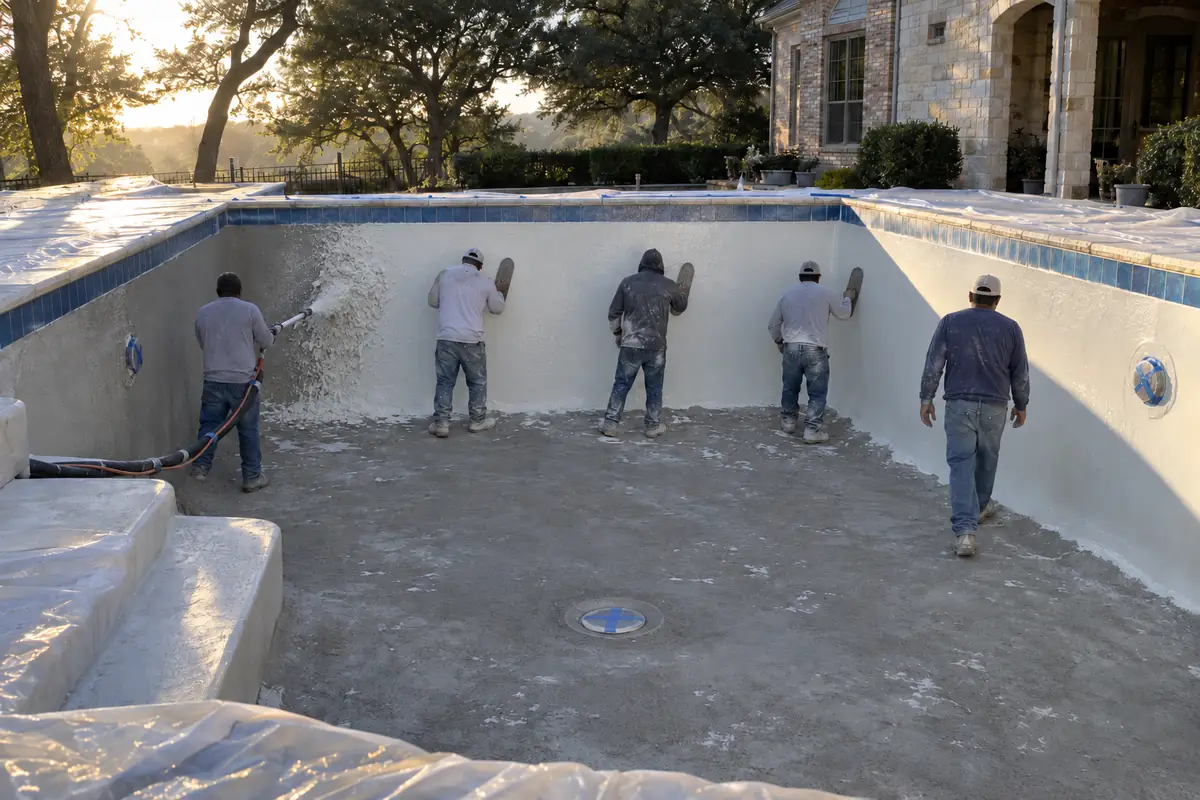
Leander Pool Resurfacing handles gunite pool replastering for homeowners across Leander and Williamson County, and every job starts with a free on-site inspection and a written itemized quote before a crew ever touches the shell. White plaster, quartz and pebble are all on the table, and the estimator sounds the old surface for hollow spots before naming a number. Call (555) 555-0100 to get an inspection on the calendar.
No two pools quote the same over the phone, and they should not: identical square footage can still need completely different prep underneath.
What a pool replaster includes in Leander
A pool replaster strips a gunite shell to sound material and rebuilds the interior surface from the shell up. Pool finish options range from white plaster (marcite), the base-cost tier, through quartz and pebble aggregates that cost more and wear differently in Leander's hard water.
The chip-out decision drives most of the price: hollow or delaminating plaster gets stripped to bare gunite, while sound old plaster can often take a bond coat instead. Resurfacing itself is not named on the City of Leander pool permit page, which covers new construction, so the estimator confirms with the building department before the drain-down starts.
What you get before a crew ever shows up
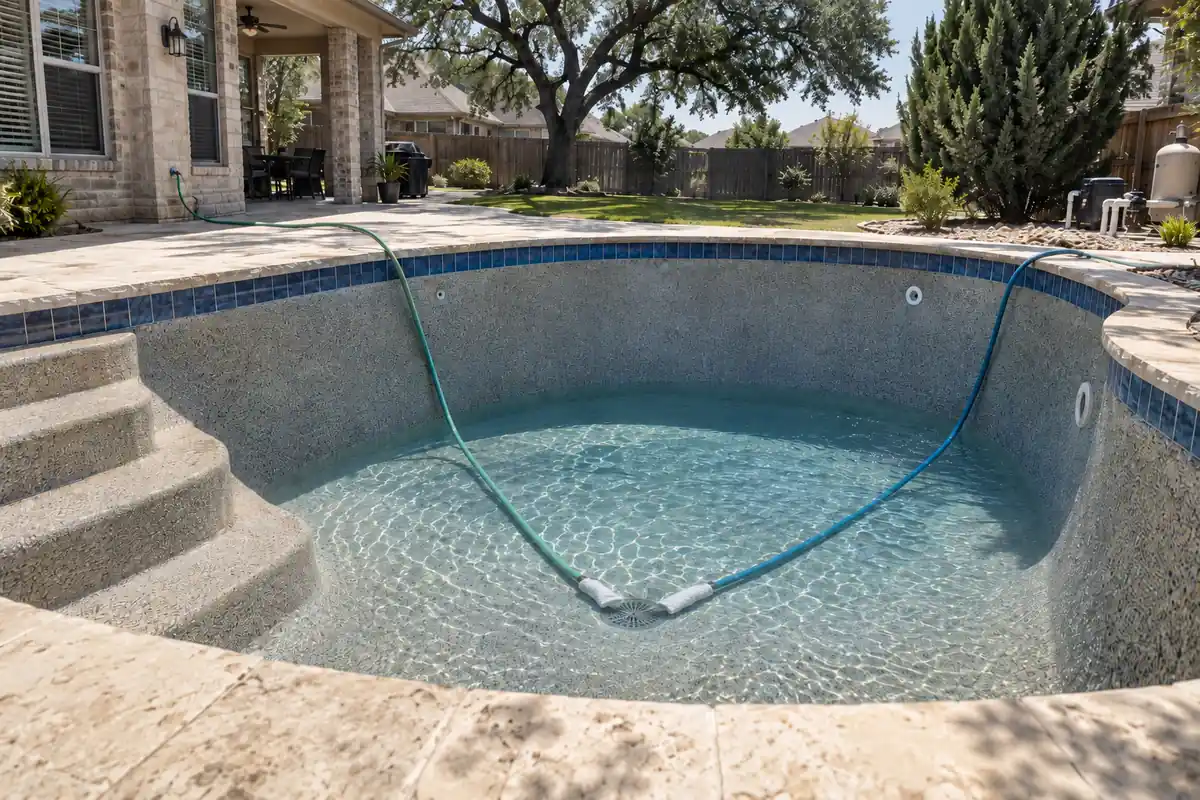
Every quote starts with a free on-site inspection: the estimator gets in the pool, sounds the plaster and measures before pricing anything. What follows is a written itemized quote covering prep, material, labor and the scheduling window, with warranty terms in writing before you sign. No verbal numbers.
Common plaster problems we fix in Leander
Leander homeowners call about the same handful of signs, usually right when the water starts looking tired.
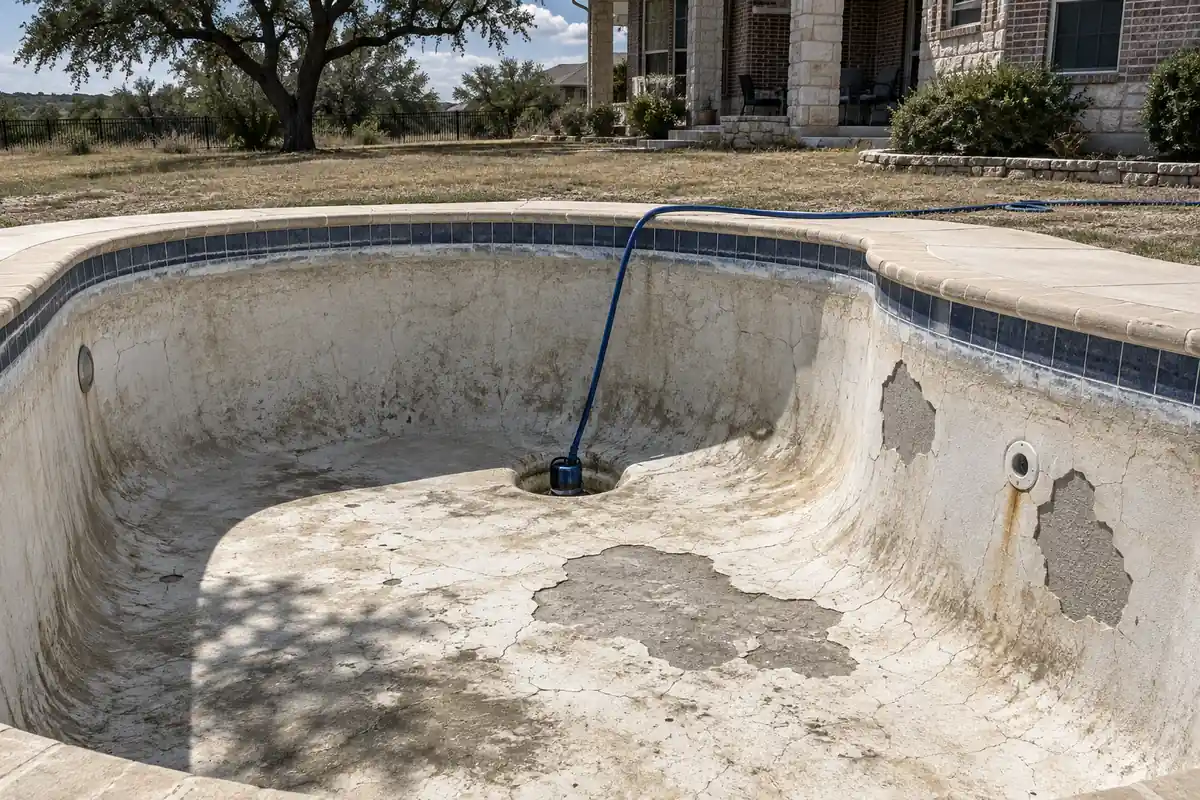
- Hollow spots that sound drummy or feel soft and squishy underfoot
- Plaster peeling or popping off the shell in flat, sharp-edged sections
- Fine craze cracks that trap algae and never quite scrub clean
- Calcium nodules or a rough, sandpaper-like scale crusting the waterline
- Gray mottling or blotchy color showing up weeks after a redo
- A patch from last season that already looks worse than the spot it covered
Why Leander homeowners choose Leander Pool Resurfacing
The estimator who quotes the job gets in the pool and sounds the plaster for hollow spots before a number goes on paper. Texas licenses no pool plasterer, so paperwork is what separates a straight quote from a guess: ask any bidder for proof of general liability insurance and the license number of whoever handles the bonding or plumbing.
White plaster, quartz, pebble or polished: choosing a finish
White plaster (marcite). The base-cost finish on this page: white Portland cement and marble sand, hand troweled to a smooth, hard surface. It costs less than any aggregate finish and is also the shortest-lived of the four, showing mottling and staining sooner in Leander's hard fill water.
Quartz. A quartz finish blends colored quartz aggregate into the plaster, and the crew washes it before leaving to expose that aggregate, the way pebble is exposed; the finer grain just leaves a smoother, more even-colored surface for less than pebble costs.
Pebble and polished. A pebble finish exposes stone aggregate after the crew washes the cement paste off before leaving and acid-washes it the next morning, leaving the roughest texture of the group and, in hard water, the longest wear. A polished version starts the same way and adds a polishing pass for a smoother feel underfoot, at a higher price.
The estimator walks through all four at the inspection against your pool's actual condition, not a brochure.
How a replaster runs, drain to refill
- A submersible pump drains the pool, exposing any hydrostatic relief plugs in the floor before the shell sits empty.
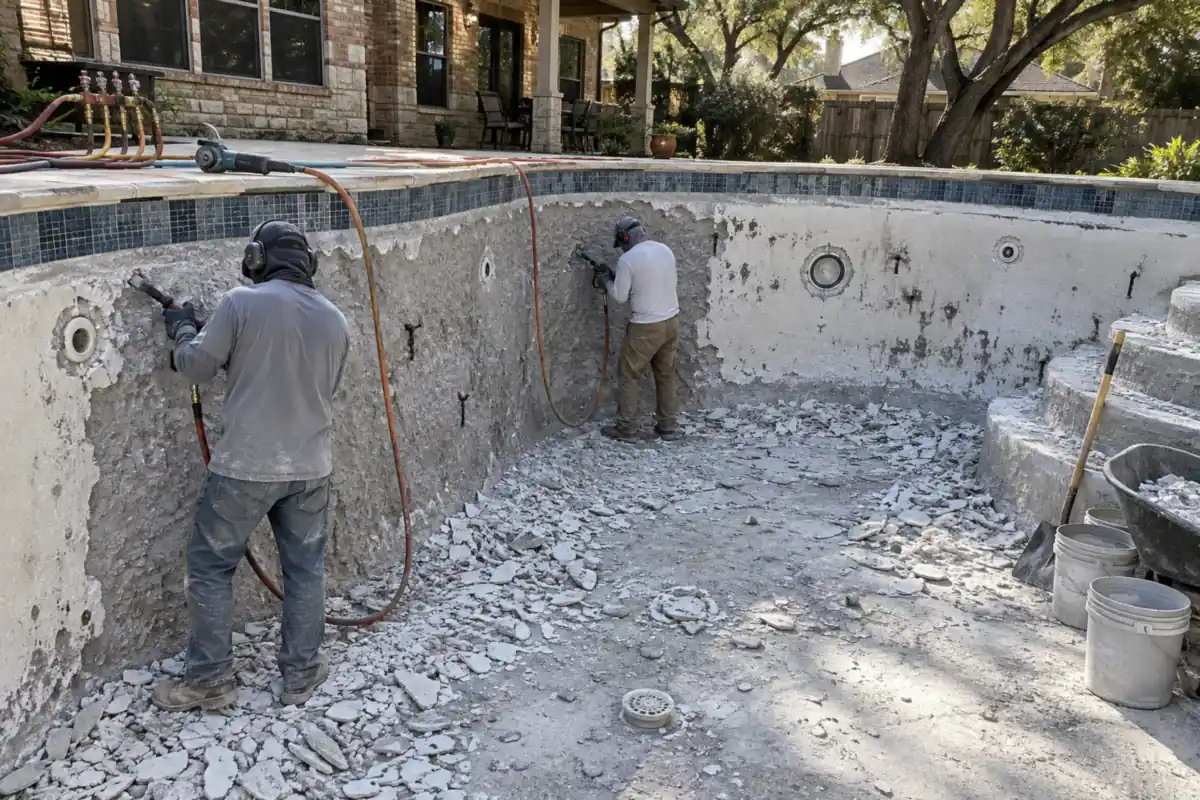
- Old plaster comes out with pneumatic chipping pistols down to bare gunite, or, if sound, gets prepped for a bond coat instead.
- Every fitting gets undercut and taped, drain covers and returns are reset, and the shell is washed and patched before the mix goes in.
- On plaster day the crew mixes on the street and pumps the material through a hose to finishers who work the walls first and the floor last.
- The fill starts from a cloth-wrapped hose at the deepest point and runs without stopping until the pool is full, so the new surface cures evenly.
- Startup chemistry begins the moment the pool is full, with brushing twice daily for the next 28 days while the water clears.
Why Central Texas water, soil and weather wear plaster out early
Leander's own water utility puts fill-water hardness at 194 parts per million and pH at 8.2 in the City of Leander water quality report, both on the harder, more alkaline side of what a fresh plaster startup wants. That chemistry, left uncorrected, drives the calcium nodules and scale homeowners call about.
West of I-35, where Leander sits, thin soil covers limestone and crumbled rock; the clay east of the highway shrinks and swells with every wet-dry cycle, and a shell that moves even slightly opens the same craze cracks that let algae take hold. Add 80 days a year at 100 degrees or hotter, including a 45-day streak in 2023, and a plaster crew has a narrow morning window before heat shrinks the surface too fast to trowel.
How much does pool replastering cost in Leander?
A straight white plaster replaster on a typical Leander pool runs $4,500 to $7,000, drain to refill. That range moves on pool size and depth, a full chip-out versus a bond coat, bonding brought up to current code, whether waterline tile and coping get added, and the refill water.
Chip-out is usually the biggest swing: two pools the same size can land far apart once the shell's condition is factored in. Call (555) 555-0100 and the estimator prices your actual shell after seeing it.
| Work | Typical range | Notes |
|---|---|---|
| White plaster (marcite) replaster, drain to refill | $4,500 to $7,000 per pool, typical 12,000 to 18,000 gallon pool | Covers chip-out or bond-coat prep; waterline tile and coping priced separately if added. |
Swipe the table sideways to see the notes column.
Every job is priced after a site visit; ranges are typical, not a quote.
Pool replastering across Williamson County and northwest Austin
The crew drives to gunite pools throughout Leander and the rest of Williamson County, from Crystal Falls and Travisso out to the towns along US 183 and 183A. Coverage runs the service areas page in full, including pool resurfacing in Cedar Park and pool resurfacing in Round Rock.
What happens when you call
The inspection
The estimator comes to the property, looks at the work in person, measures, and checks the things that change the price before quoting anything.
A written, itemized quote
Every line item goes on paper before any work starts: prep, materials, labor, cleanup and the scheduling window. No verbal numbers.
Warranty terms in the contract
Workmanship and material warranty terms come in writing and go in your contract so you can read them before you sign.
Scheduling you can plan around
You get a start window and a working-day estimate up front, and the crew tells you before anything changes.
Who this is not for
Leander Pool Resurfacing handles pool resurfacing and the related work listed on this site. It does not take on unrelated trades; if your job is outside that scope, a specialist in that trade is the right call.
Questions homeowners ask
For plain white plaster on a Leander gunite pool, where does the replaster quote usually land, and what is the chip-out line for?
Most Leander quotes for a straight white plaster replaster land between $4,500 and $7,000 for a typical pool, drain to refill. The chip-out line covers stripping old plaster to bare gunite when it is hollow or delaminating; sound plaster can sometimes skip it for a bond coat. See how the finishes compare on price and wear.
When one Leander company says resurfacing and another says replastering, are they quoting the same job?
Yes. Resurfacing is the umbrella term for redoing a pool's interior surface, and replastering is the plaster version of it. The variable that actually changes the quote is the finish family, not which of those two words a company uses.
Does the old plaster have to be chipped all the way off, or can a bond coat go over whatever is still solid?
Sound, well-bonded plaster can often take a bond coat instead of a full chip-out. Hollow, delaminating or popping plaster has to come off completely: a bond coat over failing material just fails again. The estimator sounds the shell by hand at the inspection to make that call.
My pool has already been redone once; is there a limit to how many coats a gunite shell can carry?
The gunite shell itself is rarely the limit; thickness and hollow spots from repeated bond coats are, since each layer without a full chip-out adds bulk and a fresh chance of trapped air. The estimator sounds the surface and recommends a chip-out once another bond coat would push it.
Once the pool is full again, how many days before anyone is allowed in, and why is the water milky?
Nobody swims for 7 days after the fill starts, and the water typically stays cloudy with plaster dust for 7 to 10 days while startup chemistry brings it into balance. Brushing the whole surface twice a day keeps that dust moving instead of settling into stains.
What does the first month of chemistry and brushing after new plaster involve, and who does it, the crew or me?
Alkalinity, pH and calcium hardness get brought into range in the first few days, chlorine waits 48 hours, and the surface gets brushed twice daily for 28 days. Who runs that chemistry, crew or homeowner, gets agreed in writing before the fill starts.
What happens on plaster day itself: how big a crew, where does the truck park, and how long until they are gone?
A plaster truck with a batch mixer and pump parks street-side, and the crew mixes and pumps the material into the backyard through a hose while finishers trowel the walls first and the floor last. A typical plaster day runs from early morning to around midday.
A replaster is only as good as the prep underneath it, and prep is exactly where a rushed bid cuts corners. Call (555) 555-0100 for a free inspection and a written quote on your own pool.
Get a written quote
Call (555) 555-0100 or send the form. The next step is a free on-site inspection and a written quote with every line item before any work starts.
Call (555) 555-0100