
Quartz Pool Finish in Leander, TX: Quoted in Writing After a Free Inspection
A quartz pool finish in Leander starts with a free inspection and ends with a written quote you can read before any work begins.
- Free on-site inspection
- Written itemized quote
- Warranty terms in writing
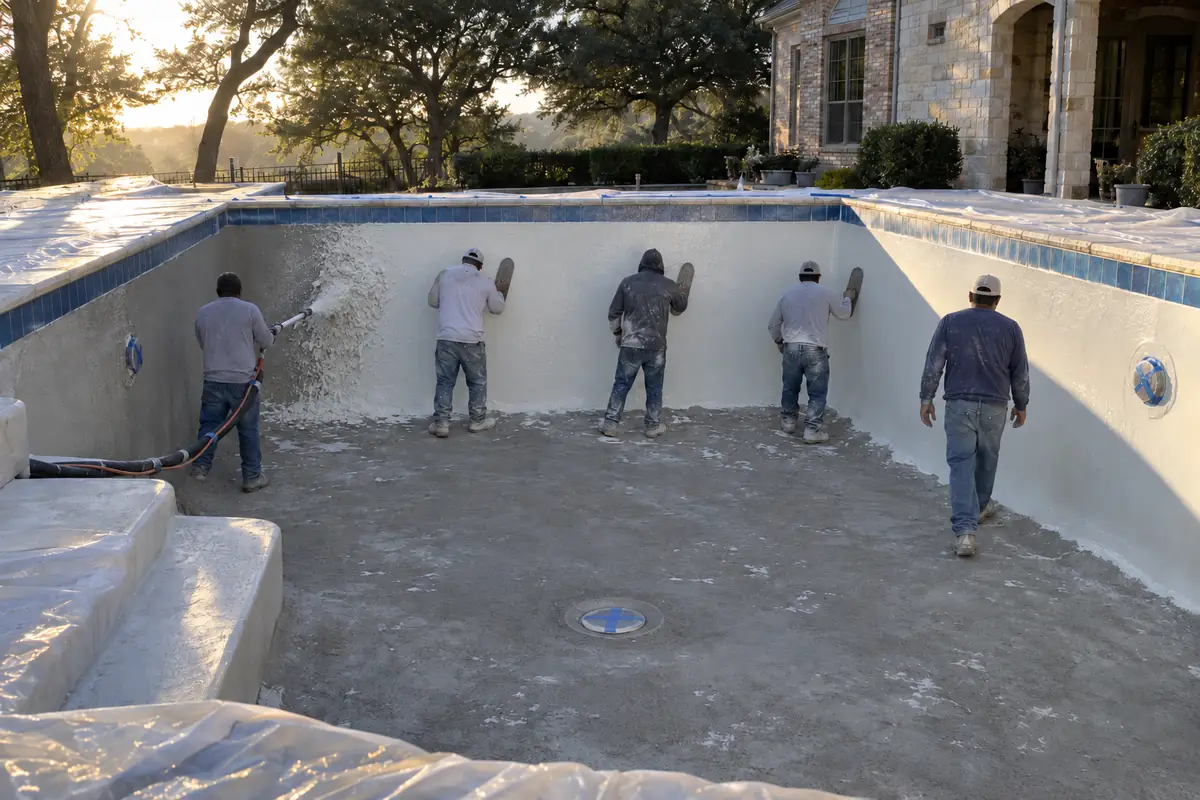
Leander Pool Resurfacing handles quartz aggregate pool finish work for homeowners across Leander and Williamson County, and every job starts with a free on-site inspection and a written itemized quote before the drain plug ever comes out. Quartz blends colored aggregate into the plaster and gets exposed the same way pebble does, just with a finer grain, and the estimator measures the shell before pricing either a full chip-out or a bond coat. Call (555) 555-0100 to get an inspection scheduled.
Quartz sits between plain white plaster and exposed pebble on both price and texture, and feeling a sample beats guessing from a photo.
What a quartz pool finish includes
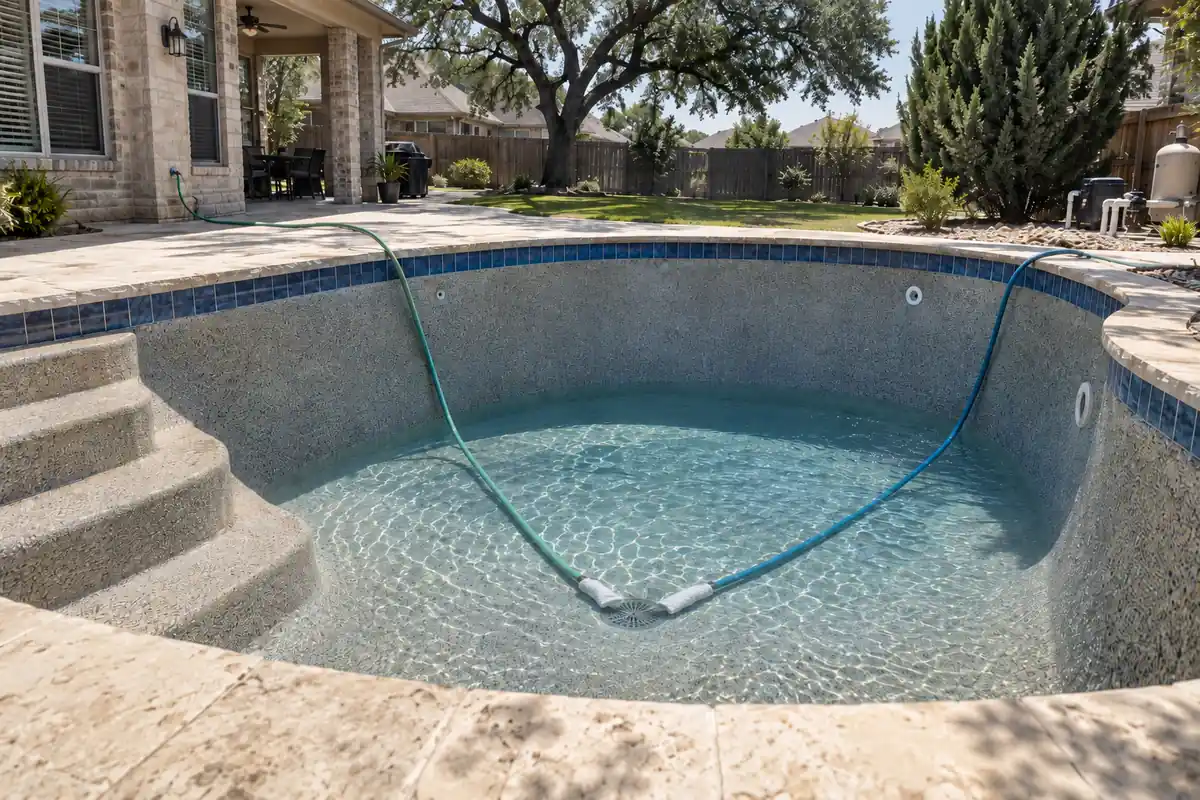
A quartz finish blends colored quartz aggregate into the plaster mix, and the crew washes it before leaving to expose that aggregate the way pebble is exposed; the finer grain gives a more even color than plain white plaster while costing less than pebble. Pool finish options also include white plaster and exposed pebble on either side of quartz on price.
The chip-out decision still drives most of the cost: hollow or delaminating old plaster needs a full chip-out to bare gunite, while sound plaster can often take a bond coat instead.
What you get before a crew ever shows up
Every quartz job starts with a free on-site inspection: the estimator checks the shell and the tile band and sounds the old plaster before pricing anything. The written quote itemizes prep, material and labor, states the scheduling window, and puts warranty terms in writing before you sign.
Common quartz and plaster problems we fix in Leander
Most calls about a quartz or plaster surface fall into a short list of complaints.
- Mottling or blotchy color that showed up soon after a redo
- Etching or a rough, sandpaper-like scale forming at the tile line
- Hollow spots that sound drummy or feel soft underfoot
- Trowel burn or dark patches where the finish set unevenly
- Cold joints where two pours of quartz plaster meet unevenly
- Calcium nodules building up along the waterline
Why Leander homeowners choose Leander Pool Resurfacing
The estimator who prices a quartz job gets in the shell, sounds the old plaster for hollow spots and checks the tile band before a number goes on paper. Texas licenses no pool plasterer, so ask any bidder for proof of general liability insurance and the license number of whoever handles the bonding or plumbing.
Quartz versus pebble and plain white plaster
Quartz, the middle tier. Colored quartz aggregate blended into the plaster mix and washed to expose it, the way pebble is exposed, just with a finer grain that keeps the surface smoother. It costs more than plain white plaster and less than pebble, and it holds color more evenly than either.
Pebble. A pebble finish exposes larger stone at the surface, trading quartz's smoother feel for the roughest, longest-wearing texture of the group in hard water.
White plaster. A white plaster replaster is the least expensive option on this page, smooth underfoot, and the first to show mottling and wear.
Homeowners who want more color than plain white without the roughest texture usually land on quartz once they feel all three at the inspection.
How a quartz finish runs, drain to refill
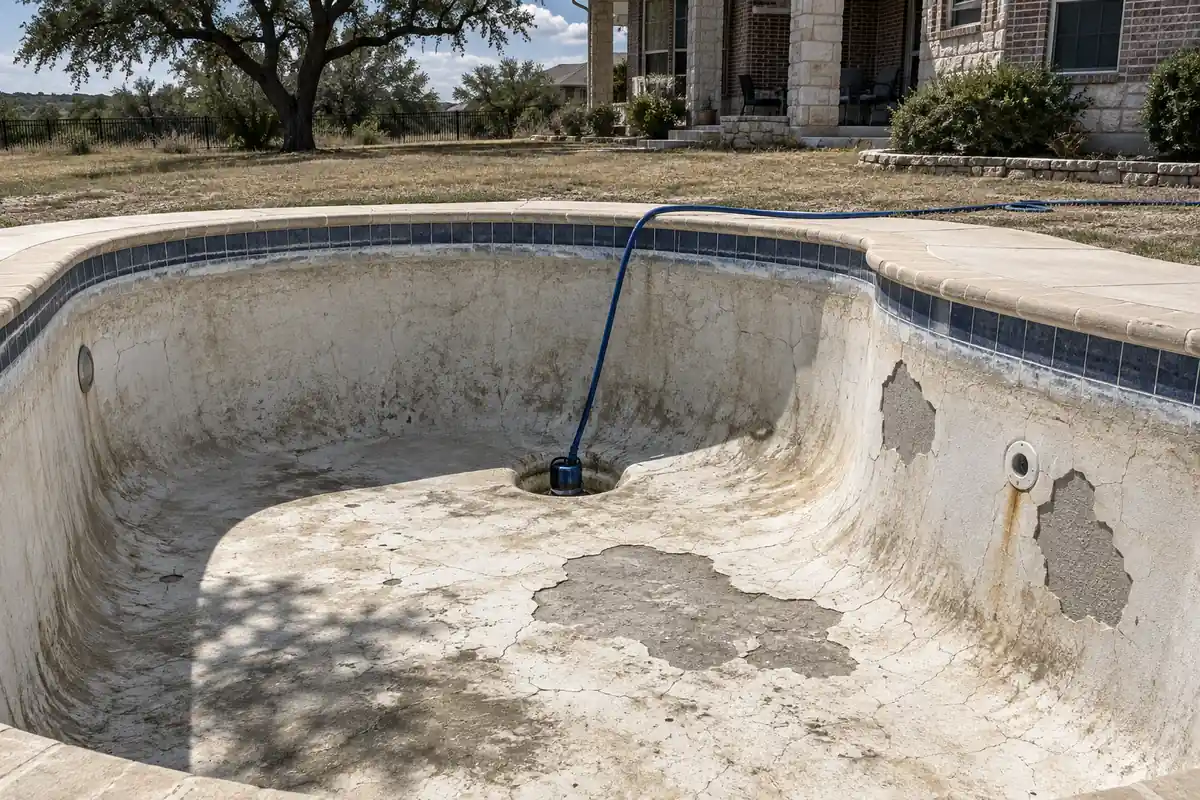
- The estimator schedules the drain days ahead, and a submersible pump empties the pool through a hose across the yard.
- Old plaster comes out with pneumatic chipping pistols down to bare gunite, or, if sound, gets prepped for a bond coat instead.
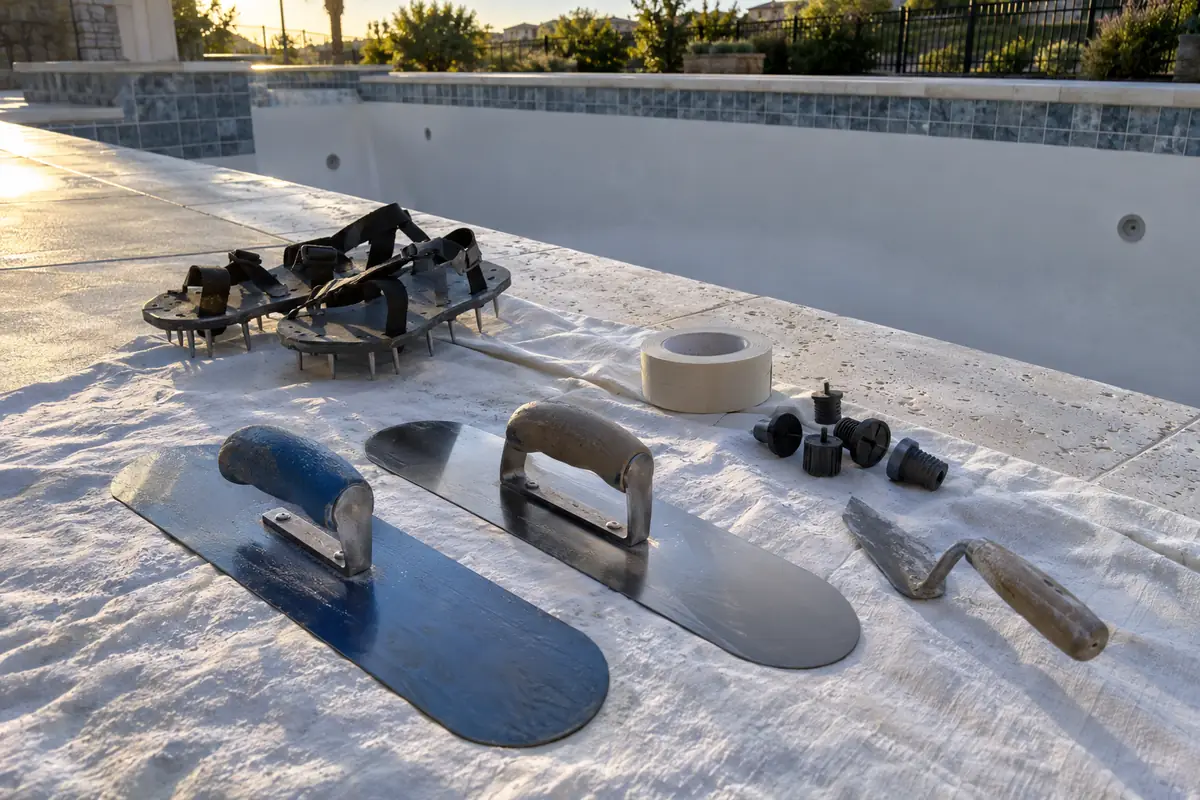
- Every fitting and the tile band get undercut, the shell is washed and patched, and fittings are taped before the mix goes in.
- On plaster day the crew mixes the quartz blend on the street and pumps it through a hose to finishers who trowel the walls first and the floor last.
- Before the crew leaves, the cement paste gets washed off the quartz to expose the aggregate, the same way pebble is exposed.
- The next morning a diluted acid wash lifts any remaining haze, and the fill starts once the surface is rinsed clean, running without stopping until the pool is full.
- Startup chemistry begins the moment the pool is full, with brushing twice daily for the next 28 days while the water clears.
Why Central Texas water and weather wear on a quartz finish
Leander's own water utility puts fill-water hardness at 194 parts per million and pH at 8.2 in the City of Leander water quality report, on the harder, more alkaline side of what a fresh startup wants. Left uncorrected, that chemistry is what drives etching and scale at the tile line.
Heat compresses the plastering window. Camp Mabry logged 80 days a year at 100 degrees or hotter in 2023, with a 45-day streak, and a crew troweling quartz that late in the morning risks a hot, dry shell setting the mix too fast to finish smooth. West of I-35, where Leander sits, thin soil over limestone keeps a shell relatively stable; the shrink-swell clay east of the highway moves the ground enough to open cracks in any finish.
How much does a quartz pool finish cost in Leander?
A quartz finish on a typical Leander pool runs $6,000 to $9,000, between the $4,500 to $7,000 range for plain white plaster and the $7,000 to $12,000 range for pebble. The gap covers the quartz blend and color, a full chip-out versus a bond coat, waterline tile, an attached spa, and the startup service.
Material and color blend move the price more than labor does; the exposure and acid-wash day quartz shares with pebble is already built into the range. Call (555) 555-0100 and the estimator prices your pool after seeing the actual shell.
| Work | Typical range | Notes |
|---|---|---|
| Quartz aggregate plaster (Diamond Brite, Quartzscapes class) | $6,000 to $9,000 per pool, typical 12,000 to 18,000 gallon pool | Covers chip-out or bond-coat prep; waterline tile and an attached spa priced separately if added. |
Swipe the table sideways to see the notes column.
Every job is priced after a site visit; ranges are typical, not a quote.
Quartz pool finishes across Williamson County and northwest Austin
The crew installs quartz finishes throughout Leander and the rest of Williamson County, out along US 79 and I-35 toward Round Rock and Georgetown. Coverage runs the service areas page in full, including pool resurfacing in Round Rock and pool resurfacing in Georgetown.
What happens when you call
The inspection
The estimator comes to the property, looks at the work in person, measures, and checks the things that change the price before quoting anything.
A written, itemized quote
Every line item goes on paper before any work starts: prep, materials, labor, cleanup and the scheduling window. No verbal numbers.
Warranty terms in the contract
Workmanship and material warranty terms come in writing and go in your contract so you can read them before you sign.
Scheduling you can plan around
You get a start window and a working-day estimate up front, and the crew tells you before anything changes.
Who this is not for
Leander Pool Resurfacing handles pool resurfacing and the related work listed on this site. It does not take on unrelated trades; if your job is outside that scope, a specialist in that trade is the right call.
Questions homeowners ask
Pebble lasts longer and quartz costs less: is that the whole story when choosing between them for a Leander pool?
Cost and expected wear are real factors, but not the only ones: texture underfoot and how evenly the color holds also separate the two. Quartz runs $6,000 to $9,000 against $7,000 to $12,000 for exposed pebble work, and quartz feels smoother, closer to plain plaster, than exposed stone.
How much more than plain white plaster does a quartz blend cost on a Leander pool, and is the labor any different?
Quartz runs $6,000 to $9,000 against $4,500 to $7,000 for plain white plaster pricing. The same crew runs most of the same sequence, but quartz adds an exposure wash and a next-day acid wash that plain plaster skips; the blend and color, plus that extra day, are what add to the cost.
How many years does a quartz finish typically go in Central Texas water before it etches or shows wear?
No source publishes a specific lifespan in years for quartz in Leander's water, so the honest answer points to signs instead of a calendar: etching around fittings and tile, a rough scale forming at the waterline, or mottling that keeps spreading are what say a quartz surface is due.
Does a quartz floor feel like old-school smooth plaster underfoot, or closer to pebble?
Quartz sits closer to smooth plaster than to exposed pebble. It is exposed the same way pebble is, but the finer quartz grain keeps a smoother, more consistent feel underfoot while adding more color than plain white.
Does a salt chlorinator wear a quartz or plaster finish faster, and does running one change which finish I should pick?
Every new finish, quartz included, needs 28 to 30 days before a salt system runs, regardless of which finish gets chosen. That waiting period is a startup-timing issue tied to how the surface cures, not a reason to pick one finish over another.
Does a quartz finish get the next-day acid wash like pebble, and does that change the fill and start-up schedule?
Yes. Quartz is an aggregate finish, so it gets the same exposure and next-day acid wash that pebble does, unlike plain white plaster, which fills right away. That extra day is already built into a typical quartz job's schedule.
Quartz earns its place between plaster and pebble by doing a little of both jobs: more color and durability than plain white, less texture and cost than exposed stone. Call (555) 555-0100 for a free inspection and a written quote on your own pool.
Get a written quote
Call (555) 555-0100 or send the form. The next step is a free on-site inspection and a written quote with every line item before any work starts.
Call (555) 555-0100