
Pool Plaster Repair in Leander, TX: Quoted in Writing After a Free Inspection
A cracked step, a hollow spot, or a peeling patch gets a free inspection and a written price before any tool touches the shell.
- Free on-site inspection
- Written itemized quote
- Scheduling window quoted up front
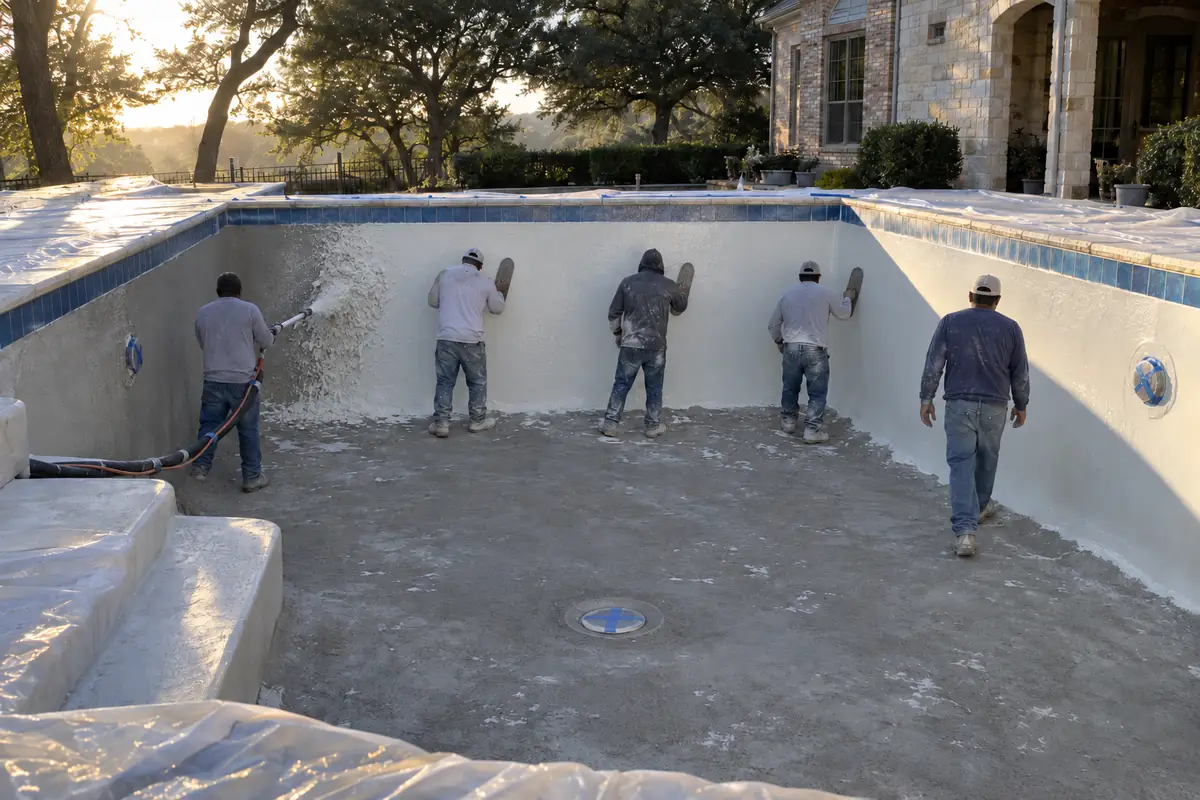
Leander Pool Resurfacing handles pool plaster repair for homeowners across Leander and Williamson County, from a single chipped step to a cluster of hollow spots the size of a dinner plate. Call (555) 555-0100 for a free on-site inspection and a written, itemized quote before anyone touches the shell.
A chip, a hollow spot, and a sheet of plaster letting go are three different jobs. The estimator sounds the surface, marks what is loose, and prices the patch, not the whole pool, unless the whole pool is what it actually needs.
What a plaster patch repair includes
Plaster patch repair covers chips, small hollow spots, and step or bench repairs on plaster, quartz, and pebble finishes that are otherwise sound. The estimator taps the surface first, separating a cosmetic chip from a hollow spot that sounds drummy underneath.
Some spots patch underwater with no drain at all; others need the water dropped a few inches below the repair so the material can cure without a current working against it. When hollow spots outnumber sound plaster, the honest answer is a full replaster, not another round of patches.
What you get before a crew ever shows up
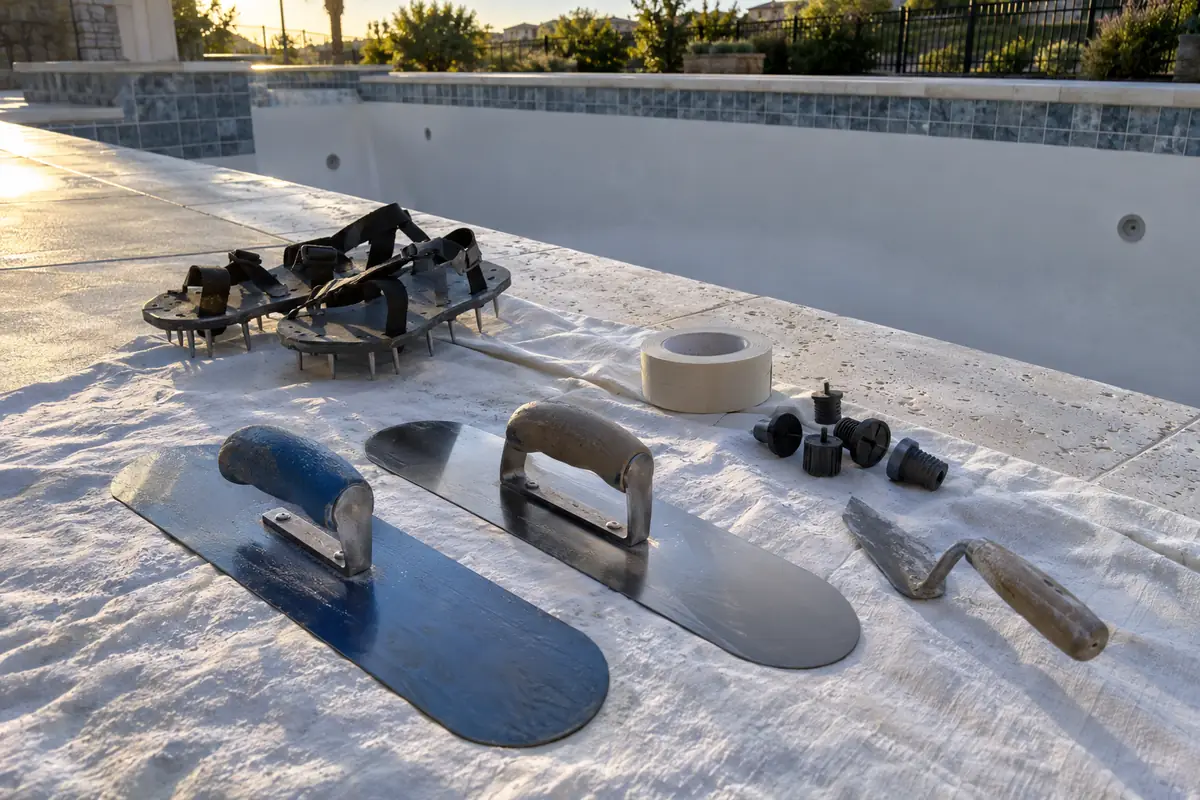
Every plaster repair starts with a free on-site inspection, not a phone-quoted guess. The estimator writes down what is loose, what is stained, and what the patch will cost before anything is scheduled.
The written quote states the scheduling window up front and puts warranty terms in writing, in the contract, before a crew is booked.
Common plaster problems we fix in Leander
- Small chips and pop-offs on steps, benches, and walls.
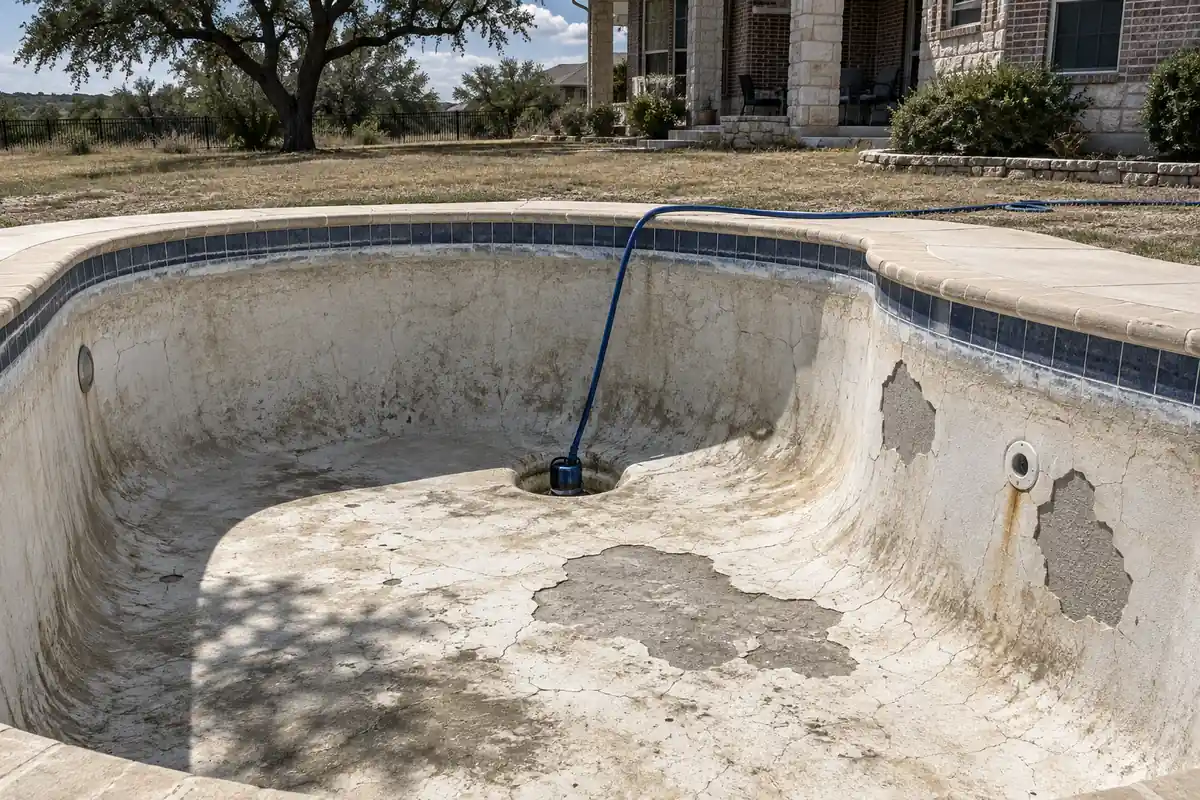
- Hollow spots that sound drummy or feel soft underfoot.
- Delaminating plaster raised or pulled away from the shell.
- Gray streaks or rust-colored stains near a return or exposed rebar.
- Craze cracks holding a shadow of algae.
- Old spike holes or patch marks left visible through the finish.
Why Leander homeowners choose Leander Pool Resurfacing
The estimator sounds the whole shell, not just the spot you called about, since a hollow patch nearby changes the price and the plan.
The quote lists each spot, the patch method, and the color match, with a scheduling window and warranty terms in the contract before work starts.
Pool Plaster Repair: Spot Patch or Full Replaster
Spot patch. A few isolated chips or a hollow spot on a step get a spot patch: loose plaster comes off to sound material, the edges get undercut, and new plaster goes in, color-matched as closely as the aged finish allows.
Full replaster. When hollow spots keep turning up as the estimator sounds the shell, patching becomes false economy: the plaster around each patch is already failing, just not chipped yet. Past that point the honest call is a full pool replaster, stripping back to gunite instead of chasing spots another season.
Color match has limits. New plaster next to fifteen-year-old plaster never disappears completely; cement color shifts as it ages in sunlight, so a patch always reads as a patch.
Staining, not structure. A calcium haze or copper stain on otherwise sound plaster calls for a drain and acid wash, not a patch, since the plaster underneath is not actually loose.
How a plaster patch visit runs
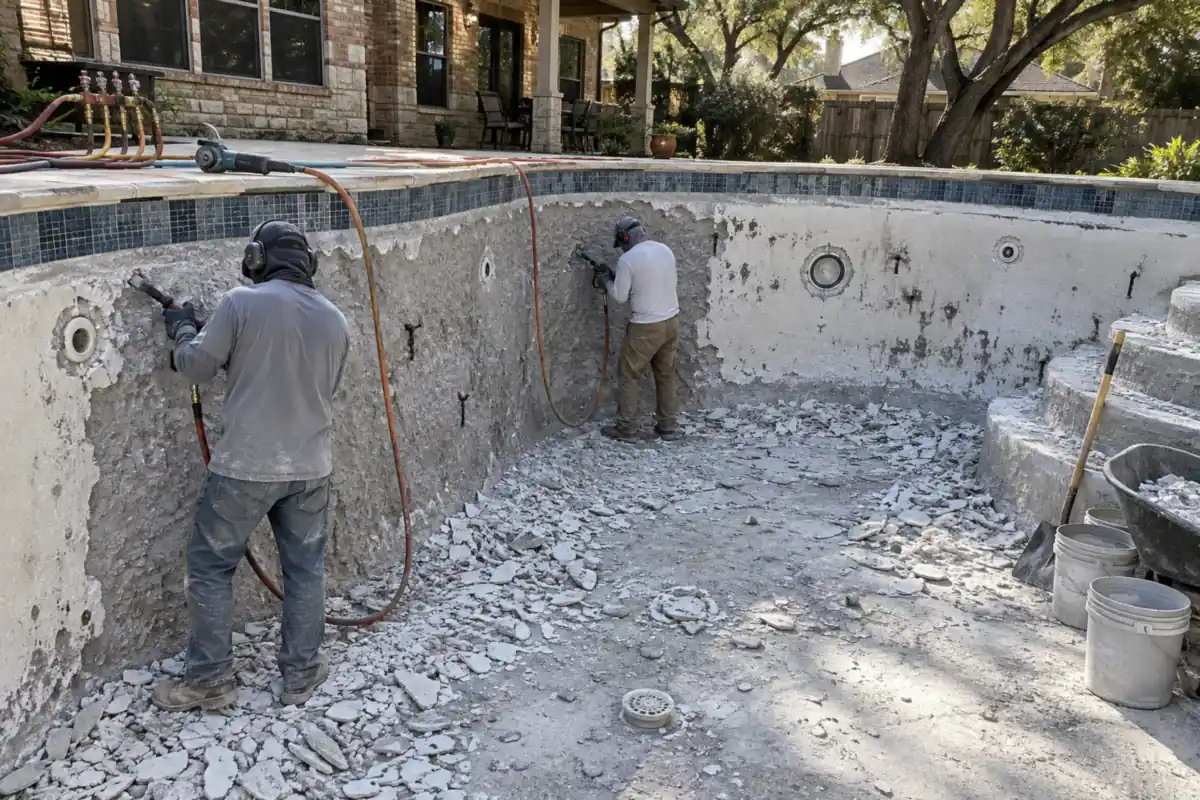
- The estimator sounds every wall, step, and bench, marking each spot that answers hollow or drummy instead of solid.
- Loose and delaminated plaster comes off down to sound material, with the edges undercut so the new patch keys into a pocket instead of feathering to nothing.
- Depending on the spot, the crew patches underwater on a small area or drops the water a few inches below the repair so the material can set undisturbed.
- The patch is color-matched to the surrounding plaster as closely as an aged finish allows and left to cure before the step or bench sees normal traffic again.
Why Central Texas soil and weather cause plaster to fail early
West of I-35, where Leander sits, the ground is thin soil over limestone, with chunks of crumbled rock mixed through the yard. East of the highway the clay shrinks and swells with every wet and dry spell, heaving fence posts and patios along with it. Either way, a shifting shell stresses the plaster bonded to it, and that stress often shows up first as a hollow spot near a step or a corner.
Winter adds its own damage: the February 2021 freeze put Central Texas through days of hard cold, and plaster left dry through a freeze event is far more likely to crack or pop loose than plaster that stays wet. Add in a housing stock where roughly two-thirds of homes, per the Census Bureau's Leander housing-age table, were built between 2000 and 2019, and plenty of original plaster here is past the point where a patch is permanent.
How much does a plaster patch repair cost in Leander?
Most patch visits run $100 to $400, covering a small area: a chip, a hollow spot, or a step repair, with a service-call minimum built into the low end. The number and size of the spots move the price the most, along with whether the crew patches underwater or has to drop the water below the repair first.
Color-matching an aged patch, and confirming the surrounding plaster is sound enough to bond to, are quoted at the same visit. Call (555) 555-0100 for a free inspection and a written price broken out by spot, not a single lump number.
| Work | Typical range | Notes |
|---|---|---|
| Spot plaster patch (chips, small hollow spots, step and bench repairs) | $100 to $400 per patch visit, small area (service-call minimum applies) | Underwater patch or a partial drain; color match to aged plaster. |
Swipe the table sideways to see the notes column.
Typical ranges for Williamson County. Every job is priced from a site visit.
Plaster patch repair across Williamson County and northwest Austin
Plaster patch repair runs across Leander and the wider service areas Leander Pool Resurfacing drives to, including pool resurfacing in Cedar Park and pool resurfacing in Brushy Creek. The same sounding-and-quote process applies wherever the crew is headed that week, whether the pool sits on limestone or clay.
What happens when you call
The inspection
The estimator comes to the property, looks at the work in person, measures, and checks the things that change the price before quoting anything.
A written, itemized quote
Every line item goes on paper before any work starts: prep, materials, labor, cleanup and the scheduling window. No verbal numbers.
Warranty terms in the contract
Workmanship and material warranty terms come in writing and go in your contract so you can read them before you sign.
Scheduling you can plan around
You get a start window and a working-day estimate up front, and the crew tells you before anything changes.
Who this is not for
Leander Pool Resurfacing handles pool resurfacing and the related work listed on this site. It does not take on unrelated trades; if your job is outside that scope, a specialist in that trade is the right call.
Plaster patch repair questions from Leander homeowners
What is the difference between a chip, a hollow spot and a sheet of plaster letting go, and which one can wait a season?
A chip is cosmetic: a small piece missing from the surface with sound plaster all around it. A hollow spot sounds drummy or feels soft underfoot because the plaster has pulled away from the shell beneath it. A sheet letting go, delamination, means a section has already separated and needs attention now; a simple chip can usually wait for a scheduled visit.
Can a peeling patch be fixed under water without draining, and how well does new material stick to old plaster?
Yes, a small, isolated peeling spot can often be patched underwater with no drain at all. The new material bonds well to plaster that is still sound; it does not bond to plaster that is already loose or delaminating, which is why the estimator sounds the area first and drains only when the repair calls for it.
If I keep patching an old finish year after year instead of replastering, what am I risking beyond looks?
Repeated patching on aging plaster risks the hollow spots spreading faster than the patches can keep up, and each new patch stands out more against a finish that keeps aging around it. Once patches outnumber sound plaster, a full pool replaster costs less trouble than another round of spot work.
Can a few bad spots be patched on their own, and what does a patch visit cost against a full replaster?
Yes: isolated spots are patched on their own once the estimator sounds the plaster and confirms the surrounding surface is sound. A pool plaster repair patch visit typically runs $100 to $400, against roughly $4,500 to $7,000 for a full replaster, so patching only makes sense while the damage stays limited.
If I know the plaster is hollow in places, do I have to tell a buyer when I sell, or can I patch it and list?
That is a question for a real estate attorney, not a pool crew, since disclosure rules depend on the specifics of your sale. What the estimator can do before you list is inspect the shell, note every soft or hollow spot in writing, and leave you with a clear record to patch from or hand to a buyer.
Are the gray streaks and rust-colored spots on my plaster a repair job, a chemistry problem, or rebar showing through?
Gray streaks usually point to how the plaster was troweled or to water chemistry during the first weeks after a replaster; rust-colored spots point to rebar or a copper fitting bleeding through the surface. A cosmetic stain on sound plaster gets a color-match patch, while rust breaking through calls for chipping out the spot before the patch goes back in.
A hollow step does not fix itself, and it rarely stays the size it started at. Get the estimator out, get a written number for the spots that actually need it, and skip the ones that do not. Call (555) 555-0100 for a free inspection before that chip turns into a bigger job.
Get a written quote
Call (555) 555-0100 or send the form. The next step is a free on-site inspection and a written quote with every line item before any work starts.
Call (555) 555-0100